Wednesday, July 18

The Economic Costs of the Bush Administration


Thomas F. Schaller, of the UMBC Political Science Department, wrote an article for the Baltimore Sun today that outlines what impact the Bush Administration is having on the American economy.

Despite decades of conservative emphasis on economic opportunity, Americans who work for a living aren't buying the "ownership society" and other presidential platitudes. Working people value "economic security" over "economic opportunity," 69 percent to 26 percent - and by security they mean health care reform and retirement security.

"Only 1 percent of Americans said the American dream means obtaining wealth," noted Ms. Lake, in direct rebuke to the familiar but false claims from conservatives that people think getting rich is the core of our national identity.

The American dream used to be simply stated: Work hard and you get ahead. But Americans are working harder than ever: Productivity is up, vacation time down. The fruits of their labor, though hardly spoiled, just don't taste as sweet.


Read the entire story here.

Schaller is the author of Whistling Past Dixie: how the Democrats can win without the South.

Vital Distinctions in Transplantation

Hospital Chaplains not only provide spiritual and emotional support to patients, staff and familes of all faiths - and none - but they also help patients, families and staff members to come to ethical decisions relating to the difficult life transitions of birth, life, death, organ donation, withdrawl of life support, and the decision to seek treatment (or not).

An article which explains the current Catholic ethical outlook follows.

Vital Distinctions in Transplantation
by Paul A. Byrne, MD

Organ and tissue donation can be divided into four general categories:

(1) A living person can give nonvital organs and tissues to another person without causing death, severe injury, or disabling mutilation to self. For example, one might give one of two kidneys, or bone marrow.

(2) Tissues including corneas, heart valves, bones, skin, ligaments and tendons can be taken after death—that is, after the heart is no longer beating and there is destruction of the vital systems, including circulatory, respiratory, and central nervous systems.

(3) Vital organs, such as the heart, liver, lungs, pancreas, and intestine, are harvested from persons declared "brain dead." Such persons are beating-heart "donors." Calling such living persons "Heart Beating Cadaver Donors" misleads the public and even members of the medical community. Can a cadaver have a beating heart and circulation?

(4) Organs are taken from "non-heart-beating donors (NHBD)." A NHBD is a living person with normal vital signs and a brain that is functioning. These persons are first taken off all life support, including the ventilator. When the pulse is no longer palpated, the organs are taken. After the organs are taken, the patient is dead. The public are continually misled. To stop a ventilator to get organs for another person is clearly an evil action.

The first two categories encompass organ and tissue donation that may constitute charitable acts, even commendable gifts of life. The latter, however, constitute a form of epivalothanasia ("imposed death") in which the "gift of life" is the immoral taking of the life of the "donor" through the excision of a vital organ or organs.

Note that organs are taken after a declaration of "brain death"—not after factual, true death, which is the end of natural life. The person from whom a beating heart is taken could well have been a person not very different from you and me. Most likely, he or she was able to walk and talk, but then something happened—possibly, brain injury from an accident, a stroke, or decreased oxygen to the brain. Now he or she is in an intensive care unit (ICU) and a ventilator is assisting breathing.

The ventilator—commonly mislabeled a "respirator"—is a machine that moves air into the lungs. It can be effective only if there are functioning respiratory and circulatory systems to add oxygen to the blood and carry the blood to and from the tissues of the body. The heart is beating; there is normal blood pressure. Intact internal organs and systems maintain the unity of the body. When a light is shined into the eye, the pupil response is not seen. When ice water is put into the ear, there is no response. No cough or gag would be observed. Other brain stem reflexes might be evaluated. A neurologist makes a declaration of "brain death" using one of many different sets of criteria. The neurologist or hospital can use any of these divergent sets. Thus, a person could be declared "brain dead" if one set is used, but not be declared "brain dead" if another set was employed.

Every set of criteria for "brain death" includes an apnea test. ("Apnea" means the absence of breathing.) This test, which has no benefit for the comatose patient and, in fact, aggravates the patient's condition, is done without the knowledge or consent of family members. The apnea test, during which the ventilator is turned off for up to 10 minutes, can induce "brain death" or cardiac arrest. Its sole purpose is to determine the patient's inability to breathe on his own in order to declare "brain death."

When patients declared "brain dead" are treated, instead of having their beating hearts cut out, they can continue to live. Pregnant women have given birth months after having been declared "brain dead." Thus, the editor of the Journal of the American Medical Association wrote,

Now we are told a brain dead patient can nurture a child in the womb, which permits live birth several weeks "post-mortem." Perhaps this is the straw that breaks the conceptual camel's back. Death of the brain seems not to serve as a boundary; it is a tragic ultimately fatal loss, but not death itself.

In the case of transplantation, after "brain death" has been declared, the ventilator and other life support are continued until it is convenient to harvest the "donor's" organs. Everyone present can witness the intact circulatory system via the beeping of the heart monitor and the visual display of the signals from the beating heart, as well as the recordable blood pressure. The intact respiratory system is manifest through the normal color of the skin. The exchange of oxygen and carbon dioxide can be verified by determining blood gasses (pH, pCO2, and pO2). The intact interdependence of circulatory and respiratory systems can be readily observed by applying pressure to the skin, resulting in blanching, which will be followed by return of normal color within a few seconds after removal of the pressure. Through more sophisticated means, an intact endocrine system (pituitary, thyroid, and adrenal hormone production) can be demonstrated. An intact functioning liver can be documented through laboratory tests.

Clearly, there are many signs present in "brain dead" patients, including vital signs that physicians and laymen are accustomed to associate with being alive. After the beating heart is excised, however, findings more commonly identified with the fact of death—that is, no circulation or breathing—can be observed. Deprived of organs needed to sustain life, the "donor" will be cold, blue, pale, and stiff—in short, dead.

Are we not being asked to accept two medically distinguishable situations as legally equivalent? To say that a patient with a beating heart, normal pulse, normal blood pressure, normal color, and normal temperature is "dead" is a lie. The force of law will not make it true.

Great care must be taken not to declare a person dead even one moment before death has occurred. Death should be declared only after, not before, the fact. To declare death prematurely is to commit a fundamental injustice. A person is living even a moment before death and must be treated as such. Every time a heart is taken for transplant, it is a beating heart that is stopped by the surgeon just prior to excision. It takes about an hour of surgery to remove the heart. During this time, it is common for the so-called "donor" to be given a paralyzing drug, but not an anesthetic. It has been reported that when the incision is made to take the organs, there is an increase in heart rate and blood pressure. Could this occur if the person were dead? The answer is no. A doctor or other medical personnel must never impose death on a patient.

It is easy to move one's emotions with images of organ recipients resuming "normal lives" after they have received a heart, but what about the life of the donor? Was the donor in fact dead? If there is any doubt about the fact of death, may one rightfully carry out an action that will impose death on another? Who sheds tears for the victims of utilitarian euthanasia?

It is wrong to impose death on an innocent human being and to participate in its imposition. Likewise, we should not encourage others to participate in organ transplantation unless all doubts about death have been removed. Everyone getting a driver's license ought to be informed of the truth about "brain death" and organ transplantation before answering the question "Do you want to be an organ donor?" After all, your life may well depend on your answer.
Dr. Paul A. Byrne, a Neonatologist, is Director of Neonatology and Director of Pediatrics at St. Charles Mercy Hospital in Oregon, Ohio, is Clinical Professor of Pediatrics University of Toledo College of Medicine, Board Certified in Pediatrics and Neonatal-Perinatal Medicine, Member of Fellowship of Catholic Scholars.

Dr. Byrne is past-President of the Catholic Medical Association (USA), formerly Clinical Professor of Pediatrics at Creighton University School of Medicine in Omaha, NE, and at St. Louis University School of Medicine in St. Louis, MO. He is author and producer of the film "Continuum of Life" and author of the books "Life, Life Support and Death," "Beyond Brain Death," and "Brain Death Is Not Death."

Dr. Byrne has presented testimony on "life issues" to eight state legislatures beginning in 1967. He opposed Dr. Kevorkian on the television program "Cross-Fire." He has been interviewed on Good Morning America, public television in Japan and participated in the British Broadcasting Corporation Documentary "Are the Donors Really Dead?" Dr. Byrne has authored articles against euthanasia, abortion, and "brain death" in medical journals, law literature and lay press.

Paul was married to Shirley for forty-eight years until she entered her eternal reward on Christmas 2005. They are the proud parents of twelve children and grandparents of twenty-six grandchildren.

http://www.catholicculture.org/library/view.cfm?recnum=7656


This item 7656 digitally provided courtesy of CatholicCulture.org


For more on the definition of death in Catholic ethics:

Evangelium Vitae:
http://www.vatican.va/holy_father/john_paul_ii/encyclicals/documents/hf_jp-ii_enc_25031995_evangelium-vitae_en.html
(at Vatican official site)
http://www.ewtn.com/library/encyc/jp2evang.htm
(from EWTN Library)
Wikipedia Page on Evangelium Vitae
Wikipedia article on Culture of Life

The Culture of Life Top Ten

The law that George W. Bush signed as Govenor of Texas that allows for the euthanasia of patients by Doctors acting under "economic considerations". That is right: GEORGE BUSH ADVOCATES EUTHANASIA AND THE CULTURE OF DEATH.
(For those of you who think that this doesn't affect you because you live outside of Texas, you have "good insurance", or are wealthy, understand this: so far the cases that have been affected by this law have involved patients who were unable to continue/maintain medical treatment due to monetary concerns. The problem is that there have been cases where patients who were conscious and responsive were taken off of ventilators by doctors and medical staff against patient and family wishes and forced to die. This is a violation of medical ethics and the right of individuals to have equal standing in society despite financial value. Currently this only affects those who "are beyond medical hope" or "unable to bear the financial responsibility of treatment"... but these laws are making it possible for Doctors and Insurance Companies to play God.

Another disturbing consequence of George Bush's law is that physicians and hospitals are given immune from civil or legal actions being taken against them under the law as long as it can be shown that they acted "reasonably". Do you trust lawyers, politicans and medical staff to act more justly and rightly than the Lord?


1 Samuel 2:6
"The LORD brings death and makes alive;
he brings down to the grave and raises up.


Monday, July 16

Our Lady of Mount Carmel, July 16, 2007


Collect:
Father, may the prayers of the Virgin Mary protect us and help us to reach Christ her Son who lives and reigns with you and the Holy Spirit, one God, forever and ever.
Amen.


First Reading: Exodus 1:8-14, 22
Psalm: Psalm 124:1-8
Gospel: Matthew 10:34 -- 11:1

What Revelation makes known to us is confirmed by our own experience. For when man looks into his own heart he finds that he is drawn towards what is wrong and sunk in many evils which cannot come from his good Creator. Often refusing to acknowledge God as his source, man has also upset the relationship which should link him to his last end, and at the same time he has broken the right order that should reign within himself as well as between himself and other men and all creatures.

-- Gaudium et spes


History and Promises of Our Lady of Mount Carmel:

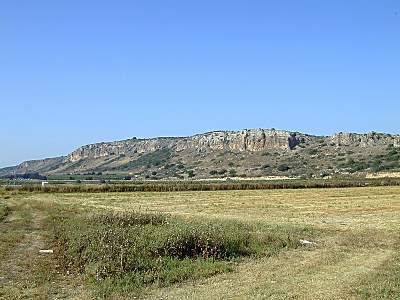
Sacred Scripture celebrates the beauty of Mount Carmel, where the prophet Elijah defended the purity of Israel's faith in the living God.

In the early centuries of the Current Era, Christian hermits withdrew to the area around the base of (and even on the slopes of) Mount Carmel to live out a simple life dedicated to Christ. Eventually, so many pius individuals had congregated in the area, that it was no longer able for them to live in seclusion as hermits; in the mid-12th Century, the Carmelite Order, which is devoted to living the contemplative life in community with other Brothers or Nuns in seclusion from the world was established. The community is under the patronage of Mary, the holy Theotokos.

Our Blessed Mother appeared to St. Simon Stock (the General of the Holy Order of Carmelites) on July 16, 1251. During the apparition, Mary gave him the Brown Scapular and said: "This will be for you and for all Carmelites the privilege, that he who dies in this will not suffer eternal fire."

The feast of Our Lady of Mount Carmel was instituted by the Carmelites on July 16th, 1332, and extended to the whole Church by Benedict XIII in 1726.

Even today, the devotion to Our Lady of Mount Carmel has spread through the entire world and all cultural, social and economic groups. Most modern "practising" Catholics are familiar with the Scapular of Our Lady of Mount Carmel (the Brown Scapular) even if it is just because they remember recievning one at their First Communion.

The conditions of the Sabbatine Privilege are:
1. Wear the Brown Scapular faithfully and constantly.
2. Observe chastitiy according to your particular state in life.
3. Recite the Little Office of the BVM daily, or with the permission of your Priest, you may substitute another pious work - such as saying the Rosary, the Divine Mercy Chaplet, praying the Psalms, Study of Holy Scriptures and writings,and Lectio Divina - for this daily Spiritual Exercise.

*Any* Priest who can hear Confessions (and that is most Priests!) can enroll you in the Society of the Brown Scapular, as well as help you develop the particular devotional that you will use for the third condition.


From CatholicCulture.org:
Things to Do:

* If you have not already done so, have a priest enroll you in the Scapular of Our Lady of Mount Carmel, or popularly known as the "Brown Scapular" and begin wearing it as a sign of your love for Our Lady. A priest enrolls people in the Brown Scapular only once. The Scapular can then be replaced afterwards by other scapulars or the scapular medal, which has on one side the image of the Sacred Heart of Jesus and on the other, the image of Mary. The medal needs to be blessed by a priest, but the cloth scapulars do not require a blessing (separate from enrollment).

* Wearing the Brown Scapular is not an automatic guarantee of salvation. It is not a magical charm, nor is it an excuse to live in a way contrary to the teachings of the Church. It is a sacramental which has been approved by the Church for over seven centuries and is a sign of one's decision to follow Jesus as did Mary, the perfect model of all the disciples of Christ. In addition to being an introduction into the Family of Carmel, the Brown Scapular is an expression of our belief that we will meet God in eternal life, aided by the intercession and prayer of Mary. While sacramentals prepare us to receive grace if we are in the right disposition, the Church emphasizes that only sacraments can confer sanctifying grace. (see Catechism, no. 1670.)

* Periodically the Church reexamines devotions and popular piety to make sure they are "not at odds with the centrality of the Sacred Liturgy. Rather, in promoting the faith of the people, who regard popular piety as a natural religious expression, they predispose the people for the celebration of the Sacred Mysteries" (John Paul II, September 2001). In accordance with Vatican II, the Congregation for Divine Worship and the Discipline of the Sacraments issued the Directory on Popular Piety in 2001 to reevaluate different devotions and popular piety. Though the Brown Scapular is included in the document as a wonderful pious practice, the Directory does not mention the Sabbatine Privilege, which continues to present historical difficulties. The Directory rather emphasizes the beautiful sign of the "filial relationship" with the faithful and Mary:

The history of Marian piety also includes "devotion" to various scapulars, the most common of which is devotion to the Scapular of Our Lady of Mount Carmel. Its use is truly universal and, undoubtedly, it is one of those pious practices which the Council described as "recommended by the Magisterium throughout the centuries."

The Scapular of Mount Carmel is a reduced form of the religious habit of the Order of the Friars of the Blessed Virgin of Mount Carmel. Its use is very diffuse and often independent of the life and spirituality of the Carmelite family.

The Scapular is an external sign of the filial relationship established between the Blessed Virgin Mary, Mother and Queen of Mount Carmel, and the faithful who entrust themselves totally to her protection, who have recourse to her maternal intercession, who are mindful of the primacy of the spiritual life and the need for prayer.

The Scapular is imposed by a special rite of the Church which describes it as "a reminder that in Baptism we have been clothed in Christ, with the assistance of the Blessed Virgin Mary, solicitous for our conformation to the Word Incarnate, to the praise of the Trinity, we may come to our heavenly home wearing our nuptial garb."

The imposition of the Scapular should be celebrated with "the seriousness of its origins. It should not be improvised. The Scapular should be imposed following a period of preparation during which the faithful are made aware of the nature and ends of the association they are about to join and of the obligations they assume."


* Pope John Paul II wore the scapular for a long time. The Holy Father's talk on The Scapular of Carmel, A Treasure for the Church mentions:

Therefore two truths are evoked by the sign of the Scapular: on the one hand, the constant protection of the Blessed Virgin, not only on life's journey, but also at the moment of passing into the fullness of eternal glory; on the other, the awareness that devotion to her cannot be limited to prayers and tributes in her honor on certain occasions, but must become a "habit", that is, a permanent orientation of one's own Christian conduct, woven of prayer and interior life, through frequent reception of the sacraments and the concrete practice of the spiritual and corporal works of mercy. In this way the Scapular becomes a sign of the "covenant" and reciprocal communion between Mary and the faithful: indeed, it concretely translates the gift of his Mother, which Jesus gave on the Cross to John and, through him, to all of us, and the entrustment of the beloved Apostle and of us to her, who became our spiritual Mother.


* For the definitive treatment on the brown scapular, read The Scapular of Our Lady of Mount Carmel: Catechesis and Ritual.

* The Blessed Virgin's scapular should remind us that Christians have an apostolate against current extremes and extravagances in modes of dress. Clothes are a symbol of the person. Like the Christian heart, dress must be chaste and simple, for one judges the interior from the exterior. It should not be necessary to add that special attention be given this matter when preparing for church attendance. Examine yourself on how well you reflect Christian modesty in your dress and if you are a parent, how well you ensure that your children are modestly dressed.

* In New York City in East Harlem is one of the oldest festivals in America for Our Lady of Mount Carmel. See Our Lady of Mount Carmel Shrine of East Harlem -- since 1881. In Brooklyn, New York, there is an annual festival for Our Lady of Mount Carmel. Find out more about the tradition of the Giglio Feast. Also look around your area for Italian parishes, maybe one named after Our Lady of Mount Carmel? Many times the parish will host wonderful festivals in her honor.

* From the Catholic Culture library, the Scapular Devotion, a description of Different Kinds of Scapulars, The Brown Scapular and information on the Scapular Medal.

* Learn more about St. Simon Stock and the Brown Scapular.

It's never too late to start a Novena to Our Lady of Mt. Carmel!

More information on :
The different kinds of Scapulars in use in the Catholic Church.
The Carmelites and the Brown Scapular
The Wikipepdia Article about Our Lady of Mt. Carmel

Apparently the Netherlands doesn't have freedom of religion...

... or the "Freedom Party" wants to take it away.

The AP reports:


The Associated Press
THE HAGUE, Netherlands

A right-wing Dutch lawmaker wants women jailed for wearing the head-to-toe Islamic robe known as a burqa, calling it a "symbol of oppression."

Geert Wilders, whose Freedom Party has nine lawmakers in the 150-seat lower house of Dutch parliament, filed a proposal Thursday to make wearing a burqa in public a crime punishable by up to 12 days jail.

"The burqa and niqab are a symbol of oppression of women," Wilders told The Associated Press in a telephone interview. He said burqas and the niqab _ a full-faced veil with only a slit for the eyes _ hindered integration of Muslim women into Dutch society and also posed a security risk.

An Islamic community spokesman, Ayhan Tonca, called Wilders' proposal "totally out of proportion" and accused him of seeking to broaden a rift between Muslims and the rest of Dutch society.

Last November, the Dutch government said it was drawing up legislation to ban burqas, but that administration was defeated in elections the same month. The new centrist coalition of Prime Minister Jan Peter Balkenende has no plans to implement a burqa ban, meaning Wilders' proposal has little chance of becoming law.

Few women wear the burqa in the Netherlands, but the debate over whether to outlaw it underscores a drift away from traditional Dutch tolerance and unease with the growing influence of Islam in the country. About 6 percent of the Dutch population of 16 million is Muslim.


I just think that it is terribly ironic that a group/coalition/party that calls itself the "Freedom Party" wants to take away the basic right of human beings to worship God as they see him. Instead of encouraging Muslim women and men to "integrate themselves into Dutch society", measures such as this will only make them more culturally and religiously distrustful and insular.

If Mr. Geert Wilders is a Christian, I pray that he will take the time to read what happened when another goverment (Rome) tried to suppress the culture, faith and social structure of another religion (Christianity) in the first couple of centuries of the Christian era. The suppression, oppression, and martyrdom of the Early Christian Church only served in its spread (in additon to its Teachings and Truth) throughout the Roman Empire.

The blood of the martyrs is the seed of the church.
--Tertullian

Sunday, July 15

Fifteenth Sunday of Ordinary Time « July 15, 2007 »


Who is my neighbour?


First Reading: Deuteronomy 30:10-14
Psalm: Psalm 69:14, 17, 30-31, 33-34, 36-37 or Psalm 19:8-11
Second Reading: Colossians 1:15-20
Gospel: Luke 10:25-37


No one really wants to sin against God, even though we do all sin without being forced to do so.

-- St. John Climacus

Prayer for Social Justice

Lord Jesus, carpenter and king, supreme sovereign of all men, look with tender mercy upon the multitudes of our day who bear the indignities of injustice everywhere. Raise up leaders in every land dedicated to Your standards of order, equity, and justice. Grant unto us, Lord Jesus, the grace to be worthy members of Your mystical body, laboring unceasingly to fulfill our vocation in the social apostolate of Your Church. Sharpen our intellects to pierce the pettiness of prejudice; to perceive the beauty of true human brotherhood. Guide our minds to a meaningful understanding of the problems of the poor, of the oppressed, of the unemployed, of all in need of assistance anywhere. Guide our hearts against the subtle lure of earthly things and undue regard for those who possess them. May we hunger and thirst after justice always.


Amen


Prayer Source: Catholic Prayer Book by Fr. John A. Hardon, S.J., Eternal Life, February 15, 1999


This week's Lectio Divina