Monday, August 24

Torture - CCC 2297, 2298 & the Bush Administration's "Interrogation" Policies

WASHINGTON – President Barack Obama has moved more forcefully than ever to abandon Bush administration interrogation policies, approving creation of a special White House unit for questioning terrorism suspects, as Attorney General Eric Holder weigh a Justice Department recommendation to reopen and pursue prisoner abuse cases.

A senior administration official told The Associated Press Monday that Obama has approved establishment of the new unit, to be known as the High-Value Detainee National Security Council The official spoke on condition of anonymity because the program has not yet been officially announced.

The new group and new directives to rely soley on the Army Field Manual when interrogating prisoners is an attempt by the administration to separate itself from allegation that the Bush administration tortured some prisoners. While the practice of waterboarding — simulated drowning — has been banned, the field manual directives would also end the practice of subjecting prisoners to loud music for long periods and sleep deprivation.

The administration is announcing the new interrogation unit on the same day that the CIA inspector generalwas to unveil a report on Bush administration handling of suspects. Details were expected to show that highly questionable tactics were used.

The Justice report is said to reveal how interrogators conducted mock executions and threatened at least one man with a gun and a power drill. Threatening a prisoner with death violates U.S. anti-torture laws.

The full article can be accessed via Yahoo!News here.

UPDATE!


WASHINGTON – CIA interrogators threatened to kill the children of one detainee at the height of the Bush administration's war on terror and implied that another's mother would be sexually assaulted, newly declassified documents revealed Monday as the government launched a criminal investigation into the spy agency's "unauthorized, improvised, inhumane" practices.

At the same time, the Obama administration announced a new policy for future interrogations — under White House supervision.

With the release of the five-year-old CIA documents, the Justice Department began a probe into the spy agency's tactics, under the direction of a veteran prosecutor who has been looking into other aspects of the interrogations.

The documents released by the CIA's inspector general said interrogators went too far — even beyond what was authorized under Justice Department legal memos that have since been withdrawn and discredited.

"Ten years from now we're going to be sorry we're doing this (but) it has to be done," one unidentified CIA officer said in the report, predicting that interrogators would someday have to appear in court to answer for such tactics.

Monday's documents represent the largest single release of information about the Bush administration's once-secret system of capturing terrorism suspects and interrogating them in overseas prisons.


The updated full article can be accessed through Yahoo!News here. Please note that the full article gives details over how the prisioners were abused and spiritually, mentally, and emotionally tortured; as such I will warn you that it is both graphic and disturbing.


Thursday, August 20

Bribing God

First Reading: Judges 11:29-39
Psalm:
Psalm 40:5, 7-10
Gospel:
Matthew 22:1-14


Today's first reading is often used by evangelical atheists, absolutist "skeptics" and others out to attack Christians and people of faith. This scripture selection appears on many anti-religion and anti-Christian sites as an example of what kind of evil persons of faith commit. (If you haven't encountered this before, I'd recommend Googling and visiting some of these sites)

Does this scripture advocate human sacrifice? Does the inclusion of this incident in the Cannon mean that the Jewish people who wrote and edited this religious text condone fathers killing their children? Do modern Christians and Jews deserve to be attacked for having this pericope in their sacred book? Let's look at the scripture and see what it really says about these matters.
29 The spirit of the LORD came upon Jephthah. He passed through Gilead and Manasseh, and through Mizpah-Gilead as well, and from there he went on to the Ammonites.
30 Jephthah made a vow to the LORD. "If you deliver the Ammonites into my power," he said,

31 "whoever comes out of the doors of my house to meet me when I return in triumph from the Ammonites shall belong to the LORD. I shall offer him up as a holocaust."

32 Jephthah then went on to the Ammonites to fight against them, and the LORD delivered them into his power,

33 so that he inflicted a severe defeat on them, from Aroer to the approach of Minnith (twenty cities in all) and as far as Abel-keramin. Thus were the Ammonites brought into subjection by the Israelites.

34 When Jephthah returned to his house in Mizpah, it was his daughter who came forth, playing the tambourines and dancing. She was an only child: he had neither son nor daughter besides her.

35 When he saw her, he rent his garments and said, "Alas, daughter, you have struck me down and brought calamity upon me. For I have made a vow to the LORD and I cannot retract."

36 "Father," she replied, "you have made a vow to the LORD. Do with me as you have vowed, because the LORD has wrought vengeance for you on your enemies the Ammonites."

37 Then she said to her father, "Let me have this favor. Spare me for two months, that I may go off down the mountains to mourn my virginity with my companions."

38 "Go," he replied, and sent her away for two months. So she departed with her companions and mourned her virginity on the mountains.

39 At the end of the two months she returned to her father, who did to her as he had vowed. She had not been intimate with man. It then became a custom in Israel
Jephthah tried to bribe God into doing what he wanted - notice the bargaining that occurs in verses 30 and 31. Jephthah says that if God does what he wants, then he will do something for God. This fails on several levels:
  1. Jephthah thinks that he is so "tight" with God that he knows what God wants from him and the entire people of Gilead. All Jephthah really knew is what God wanted him to do, but he extrapolated from there.
  2. Jephthah thinks that he can influence God and his actions. Jephthah thinks that he can have God act in a quid pro quo manner. By assuming this, Jephthah does not respect the power and majesty of God.
  3. Jephthah ignores that God does not want human sacrifice by offering to make a burnt offering out of the first person that comes out of his house to greet him. Jephthah likely had many sheep, lambs, goats, and cattle that he could have chosen from to provide an appropriate thanksgiving sacrifice to God. Even a simple offering of bread, grain, or olive oil - if given with the right heart - would have sufficed.
  4. Instead of admitting to God that he had made a rash promise before God, Jephthah decided to go through with it and kill his daughter. It was more important to keep a promise made hastily at the beginning of a battle than to honor the vows that he made to God when he presented his daughter after her birth for blessing.
  5. He made the mistake of putting his own public image and ego above his love for the other members of his family. Jephthah made an idol out of his public image and status as a warrior-chief.
  6. Admitting that he had rashly made a vow which could not be kept (because it involved the murder of another human being) would have caused Jephthah to be socially ostracized, and removed from power as warrior-chief. Fear of ostracism would not constitute a defense, however. Jephthah had previously been exiled to the land of Tob because he was the child of Gilead by a mistress. Because he had lived in exile, he should have known that his band of men could exist outside the social and political sphere of Gilead. Ostracism pales in comparison to the murder of an only child "in the name of god".
Jephthah should have put his daughter's life before his own efforts to save face; his narcissistic inability to admit and own his own error ended up costing his daughter her life.

These factors make it quite evident that Jephthah - like so many other individuals we meet in the biblical texts - is not held up as an example to be followed, but instead as an admonition of what not to do. He is an example of what will happen if we do not live in harmony with the will of G-d.

Like many of the other people within the book of Judges, the fact that Jephthah is a leader shows how far Israel had fallen in the short period following the Exodus. The people have the Laws of Moses, but they do not follow them. They are so ignorant of what God asks for and requires of his chosen, that Jephthah thinks that God somehow delights in murder. Jephthah thinks that offering up a member of his own household is the best sort of sacrifice possible - not something that angers and saddens God.

The main point of the story of Jephthah is that if we do not know God, and we do not know ourselves, our triumphs will become grotesque tragedies. Only if we know the true nature of God can we learn what He desires and do it.

Tuesday, August 18

Health Care - the USCCB statement

Yesterday the Bishop William F. Murphy of the Diocese of Rockville Centre, Chairman of the Committee for Domestic Justice and Human Development of the USCCB sent this letter to all members of Congress (it is in .pdf format). It was also CCed to the White House and the Department of Health and Human Services.

Contained in the letter are several points that any health care reform should contain. These points are based upon Catholic teachings as well as basic social justice concerns.

"Health care reform needs to reflect basic ethical principles. We offer these as a guide:
  • a truly universal health policy with respect for human life and dignity;
  • access for all with a special concern for the poor and inclusion of legal immigrants;
  • pursuing the common good and preserving pluralism including freedom of conscience and variety of options; and
  • restraining costs and applying them equitably across the spectrum of payers"

A summary of the letter, as given in the USCCB press release, states:

09-161 FOR IMMEDIATE RELEASE

U.S. Bishops Urge Congress to Observe Respect for Life, Access for All in Health Care Legislation

WASHINGTON—“Genuine health care reform that protects the life and dignity of all is a moral imperative and a vital national obligation,” said Bishop William F. Murphy of Rockville Centre, N.Y., as he outlined the policy priorities of the United States Conference of Catholic Bishops (USCCB) on the issue of health care in a July 17 letter to Congress. The letter supported efforts to pass health care reform, but warned against inclusion of abortion.

Writing on behalf of the bishops as chairman of their Committee on Domestic Justice and Human Development, Bishop Murphy said the bishops have advocated comprehensive health care reform for decades and recommended four criteria for fair and just health care reform: respect for human life and dignity, access for all, pluralism and equitable costs.

“Two of these criteria need special attention as Congress moves forward with health care reform,” Bishop Murphy said.

On respecting life and dignity, he said, “No health care reform plan should compel us or others to pay for the destruction of human life, whether through government funding or mandatory coverage of abortion. Any such action would be morally wrong.”

After citing protections from public funding of abortion in U.S. law, Bishop Murphy added, “Health care reform cannot be a vehicle for abandoning this consensus which respects freedom of conscience and honors our best American traditions. Any legislation should reflect longstanding and widely supported current policies on abortion funding, mandates and conscience protections because they represent sound morality, wise policy and political reality.”

On the issue of access for all, Bishop Murphy said, “All people need and should have access to comprehensive, quality health care that they can afford, and it should not depend on their stage of life, where or whether they or their parents work, how much they earn, where they live, or where they were born. The Bishops’ Conference believes health care reform should be truly universal and it should be genuinely affordable.”

He went on to cite that, even after the implementation of health care reform, some families, including many immigrants, will not be covered and urged Congress to adequately fund clinics and hospitals that serve as a safety net for these people.

The full text of Bishop Murphy’s letter can be found online at: www.usccb.org/sdwp/national/2009-07-17-murphy-letter-congress.pdf
---


GET INFORMED:
There is a lot of talk (or should I say yelling?) these days about how "socialized medicine" is evil, that it promotes abortion and euthanasia, and other falsehoods. If you would like to know what health care is like in countries with public or socialized health systems, please visit the following sites:
  • country profiles - which contains facts, figures, and trends on countries’ health systems
  • at a glance summaries - summaries of all European countries, available in English and Russian, by the European Observatory on Health Systems and Policies
  • Snapshots of Health Systems - a 59pg. report that covers 16 European countries, detailing their health systems and reforms that are currently being made in them to reduce costs while providing superior care
GET INVOLVED:

PHONE: Call your members of Congress (use the Capitol Switchboard at (202)-224-3121) Keep on trying if it is busy! Make sure your voice is heard!

WRITE: to contact your Representative, Senators, or President Obama, click on the links, fill in the infos and tell them health care reform should:
  1. Include health care coverage for all people from conception until natural death, and continue the federal ban on funding for abortions;
  2. Include access for all with a special concern for the poor and immigrants;
  3. Pursue the common good and preserve pluralism, including freedom of conscience; and
  4. Restrain costs and apply costs equitably among payers.
MEET: Set up a face-to-face meeting with your members of Congress. Take the USCCB letter and talk with them about their plans to reform health care - if they have differences from what the Church teaches, make note of them. Share your experience on Catholic message boards, in your blog, or even in a tweet. Tell others in your Parish who are interested in social justice.

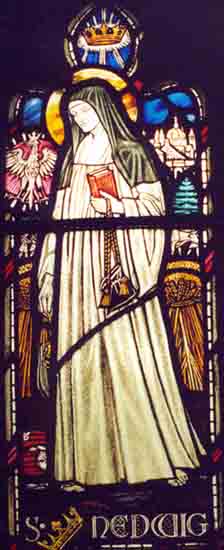
PRAY! Pray the Rosary, the Chaplet of Divine Mercy, or your favorite novena with the intention of health care reform as outlined in the Bishops' Letter. St. Hedwig is a good person to go to with requests about social justice, welfare, and health care!

Monday, August 3

Monday in the 18th Wk of Ordinary Time

First Reading: Numbers 11:4-15
Psalm: Psalm 81:12-17
Gospel: Matthew 14:13-21


Boundaries

Both of today's scripture readings deal with boundaries... a subject that you hear a lot about on shows like Dr. Phil and Oprah. What are boundaries? How do they apply to today's scripture selections?

In the book Boundaries, Dr. Henry Cloud and Dr. John Townsend define boundaries as parameters that "show us what we are responsible for". (32) Boundaries also "help us to define what is not on our property and what we are not responsible for".(ibid) Boundaries therefore protect us from others encroaching on our personal, emotional, and spiritual space. Simply put, boundaries are what define us. They are similar to the wall of a cell, which let in nutritious things that are good for the cell and exude bad things like waste products. Like a cell wall, our boundaries need to be permeable so that we can take in new experiences and love as well as let go of past hurts and injuries.

Where do we see boundaries in today's readings? Let us first start with the first reading, which is from Numbers 11.

4
The children of Israel lamented, "Would that we had meat for food!
5
We remember the fish we used to eat without cost in Egypt, and the cucumbers, the melons, the leeks, the onions, and the garlic.
6
But now we are famished; we see nothing before us but this manna."
7
Manna was like coriander seed and had the appearance of bdellium.
8
When they had gone about and gathered it up, the people would grind it between millstones or pound it in a mortar, then cook it in a pot and make it into loaves, which tasted like cakes made with oil.
9
At night, when the dew fell upon the camp, the manna also fell.
10
When Moses heard the people, family after family, crying at the entrance of their tents, so that the LORD became very angry, he was grieved.
11
"Why do you treat your servant so badly?" Moses asked the LORD. "Why are you so displeased with me that you burden me with all this people?
12
Was it I who conceived all this people? or was it I who gave them birth, that you tell me to carry them at my bosom, like a foster father carrying an infant, to the land you have promised under oath to their fathers?
13
Where can I get meat to give to all this people? For they are crying to me, 'Give us meat for our food.'
14
I cannot carry all this people by myself, for they are too heavy for me.
15
If this is the way you will deal with me, then please do me the favor of killing me at once, so that I need no longer face this distress."
The first "boundary violation" that we see in this scripture is that Moses took the crying out of the people personally. He acted as if the Israelites were complaining about him. He did not accept that the Israelites were crying out to G-d, and that was between them and Him (meaning G-d, not Moses). It was not Moses' problem. Moses committed a boundary violation against both the children of Israel and G-d. He wanted to be responsible for the problems of both Israel and G-d.

Moses cries to G-d that the people "are crying out to me,'Give us meat for our food'". This is a lie however, as the people were not crying out to Moses - they did not hold him accountable for the current state of affairs - instead they were crying out to the god of Moses, whom they blamed for the current state of affairs. Moses made the mistake of thinking that if the people talked smack about G-d, they were talking smack about him. We can be guilty of the same thing today whenever someone attacks our personal faith or belief in general. Rather than the person's anger being directed where it should be (the person or institution that caused them spiritual pain) they are dumping it on us - and we take it personally. A boundary violation on the part of someone else does not mean that we can violate their boundaries in return.

Instead of taking the crying and complaining personally, Moses should have confronted the people about their behavior. He should have told the people that the manna and their hunger were both temporary things. If they would follow G-d, appreciate what they had been given (after all they at least had food and water in the desert), and keep their eyes on the Promised Land, soon their journey through the desert wilderness would be over. The land that they were traveling toward would be much better than what they were leaving behind.

Instead of doing this, Moses took all the burden of the crying, complaining, and kvetching onto himself. Moses was trying to take on the burdens of G-d! He even blamed G-d (v.11) for giving him a burden too big and heavy for him - as if G-d is to blame for our own inability to maintain healthy boundaries! As one would expect, Moses cries out " I cannot carry all this people by myself, for they are too heavy for me". This is absolutely true - as we can only be responsible for ourselves. We cannot be responsible for others, for when we do, we violate their boundaries, steal their autonomy, and disrespect their personhood.

Taking on the responsibilities and burdens of others will only frustrate us and wear us out.

In contrast to Moses' lack of setting and respecting of boundaries, Jesus shows us how to care for others while caring for ourselves. As usual, Jesus shows us the way to live.

12
His disciples came and took away the corpse [of John the Baptist] and buried him; and they went and told Jesus.
13
When Jesus heard of it, he withdrew in a boat to a deserted place by himself. The crowds heard of this and followed him on foot from their towns.
After Jesus heard about the death of John the Baptist, he went off by himself for some personal me time in a quiet, isolated place. He withdrew from his disciples and followers in order to provide appropriate self-care.

Notice that Jesus took responsibility for his own mental and emotional well-being by taking some time off during a period of great distress. He trusted that the disciples could take care of things while he went to care for himself. If we don't take time for ourselves, like Moses, we won't be able to help or support others when the need our help.

When Jesus came back to his disciples and followers, he was ready to care for them:
14
When he disembarked and saw the vast crowd, his heart was moved with pity for them, and he cured their sick.
15
When it was evening, the disciples approached him and said, "This is a deserted place and it is already late; dismiss the crowds so that they can go to the villages and buy food for themselves."
16
[Jesus] said to them, "There is no need for them to go away; give them some food yourselves."
17
But they said to him, "Five loaves and two fish are all we have here."
18
Then he said, "Bring them here to me,"
19
and he ordered the crowds to sit down on the grass. Taking the five loaves and the two fish, and looking up to heaven, he said the blessing, broke the loaves, and gave them to the disciples, who in turn gave them to the crowds.
20
They all ate and were satisfied, and they picked up the fragments left over --twelve wicker baskets full.
Because he took care of himself, Jesus was able to provide care for a large crowd with many basketfulls left over.


Sunday, August 2

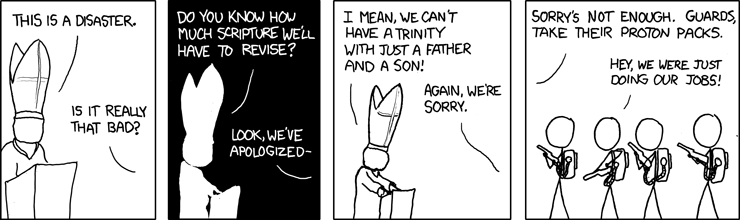
18th Sunday in Ordinary Time & The Holy Ghost comic


Eighteenth Sunday in Ordinary Time


Today's MP3 of the Readings and Homily from Our Lady of the Angels Church.

Readings and Commentary for the 18th Sunday in Ordinary Time,from the New St. Joseph Sunday Missal

Theme: The Lord gave them Bread from Heaven
...We should develop a feeling for symbolism since it plays such an important role in religion. Water, bread, wine, salt, yeast, fire, light, rain, dew, thunder, lightning - time and again these are used to impart a message and when properly understood they do so more efficiently than theoretical concepts can do. Symbolism contains an intuitive (suggestive) power that appeals not only to the intellect but to the total person, heart and mind.
Today's readings utilize the power of symbolism of bread to bring out the message that god wants to feed us, to take care of us on all levels of human existence. "The Lord gave them bread from heaven" (the Responsorial Psalm)

First Reading: Ex 16:2-4, 12-15 [God gives Mannah from Heaven]
Commentary on first reading from the Sunday Missal:
God's word in this tradition brings out to us that graowing toward maturity in Christ is a lifetime process. As long as we are a pilgrim Church, wandering through the desert of life, we must work hard to attain such maturity. But God is with us, providing us manna (bread) and quail (meat), in other words, giving us whatever in his infinite wisdom and love he knows we need.

Responsorial Psalm: Ps 78 [Heavenly Bread]
R: The Lord gave them bread from Heaven

Second Reading: Eph 4:17, 20-24 [A New Self]
Commentary on second reading from the Sunday Missal:
"This is not how you learned Christ." Note that Paul does not say "how you learned about Christ". No, you learned Christ whom you accepted as a person in faith, with all the values that he stands for.
Christianity is not primarily a doctrine to go by; it is a person-to-person relationship with our Lord. Partaking in the Eucharist, the bread of life, should help us to "learn Christ" ever more intimately.

Alleluia: Mt 4:4b
Alleluia, alleluia.
One does not live on bread alone, but on every word that comes forth from the mouth of God.
Alleluia, alleluia.

Gospel: Jn 6:24-35 [Christ is the True Bread of Heaven]
Commentary on the Gospel reading from the Sunday Missal:
Jesus states that he is the mannah, the bread of life, from heaven that human beings need on their way through life. Feeding the crowd was a sign that those who had eaten did not understand. Patiently, our Lord explains: "Do not work for food that perishes, but for the food that endures for eternal life... I am the bread of life."
We should be aware if this whenever we encounter our Lord in the signs of bread and wine.
The Prayer after Communion states " Lord, you give us the stregnth of new life by the gift of the eucharist. Protect us with your love and prepare us for eternal redemption".

Saturday, August 1

St. Alphonsus Liguori, Bishop and Doctor of the Church


Readings for the day:

First Reading: Leviticus 25:1, 8-17
Psalm: Psalm 67:2-3, 5, 7-8
Gospel: Matthew 14:1-12


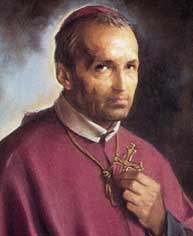
St. Alphonsus Liguori founded the Redeptorist Order in 1732. He also dedicated his entire adult life to creating a compassionate and theologically sound response to the Jansenist heresy. His small order of brothers and priests became especially important after the suppression of the Jesuits in 1773. Up until their suppression the Jesuits had been the main defenders of Catholic theology against the assults of the Jansenists during the counter-Reformation; their opposition to the Calvinistic qualities of Jansenism was one of the reasons that they were forced to disband.